

Your decision to rebrand (or not) following an acquisition will define its performance. This guide from WebFX provides the models and scorecards that teams can use to make an informed decision.
Whether you should rebrand after an acquisition doesn’t have a one-size-fits-all answer. As mergers and acquisitions have a 70% or higher failure rate, businesses need to do due diligence to determine whether to rebrand or maintain separate brands following an acquisition.
Decide whether to rebrand after an acquisition with the following steps:
First, outline your options.
In most cases, businesses use any of the following post-acquisition models:
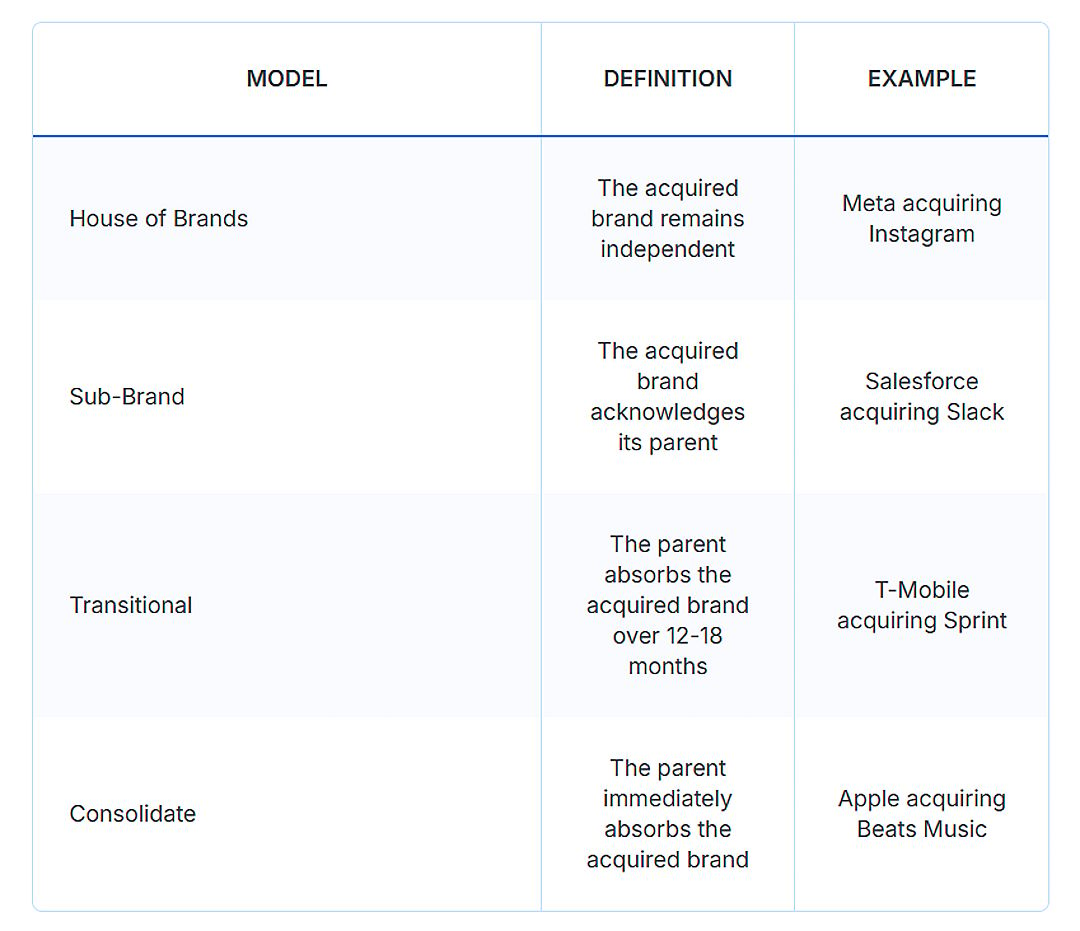
Next, take inventory of your acquired brand’s equity. If your business invested in due diligence services before acquiring the brand, you’ll likely have some of this information already available:
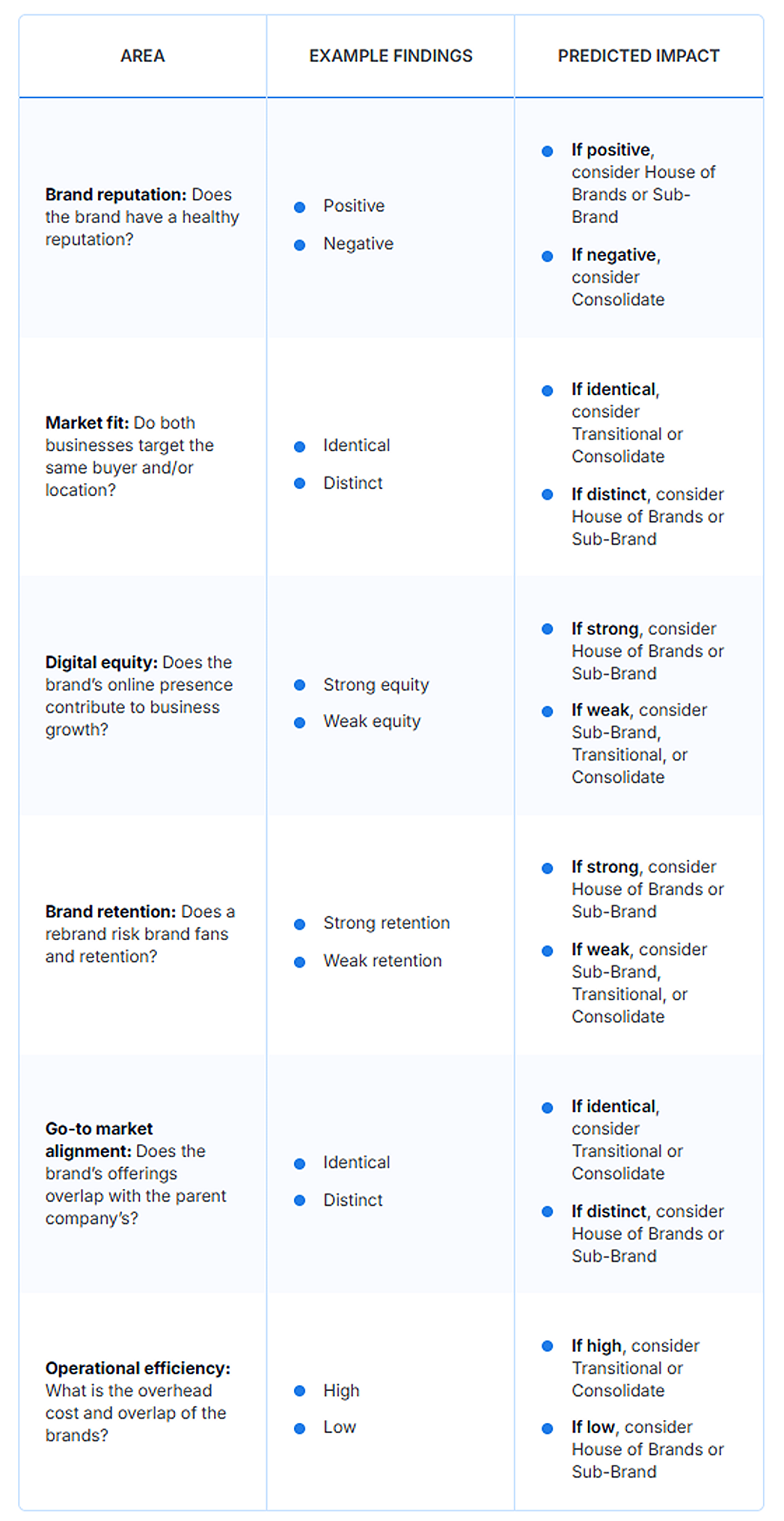
Note: Operational efficiency is one area to consider when evaluating a rebrand following an acquisition. Businesses can often reduce costs and align structures through the house of brands or sub-brand model, which often generates bulk discounts from vendors.
Now comes discussion time. This step in determining whether to rebrand an acquired company often takes months and considers factors outside your initial audit, such as execution costs and leadership preferences.
However, to get discussions and brainstorms started, the scorecard below can help teams hone in on the most applicable models and surface which areas need deeper discussion.
Get started with the scorecard by:
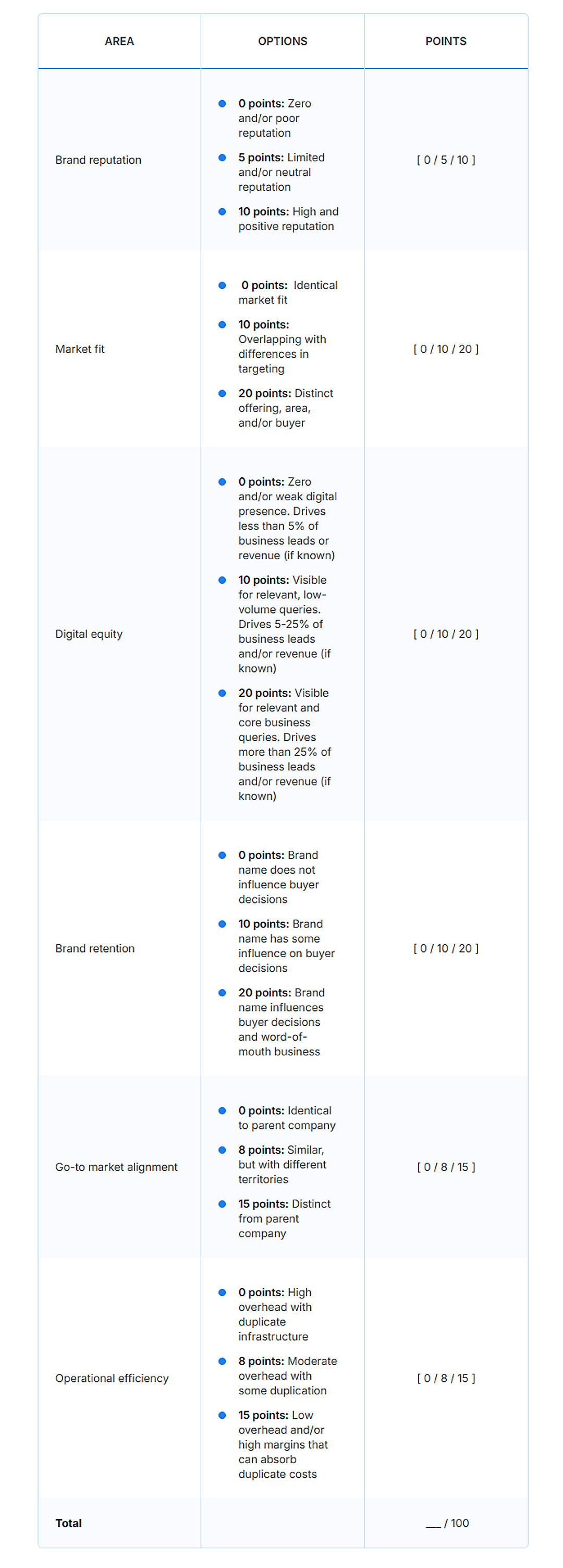
After tallying your points, interpret them using the table below:
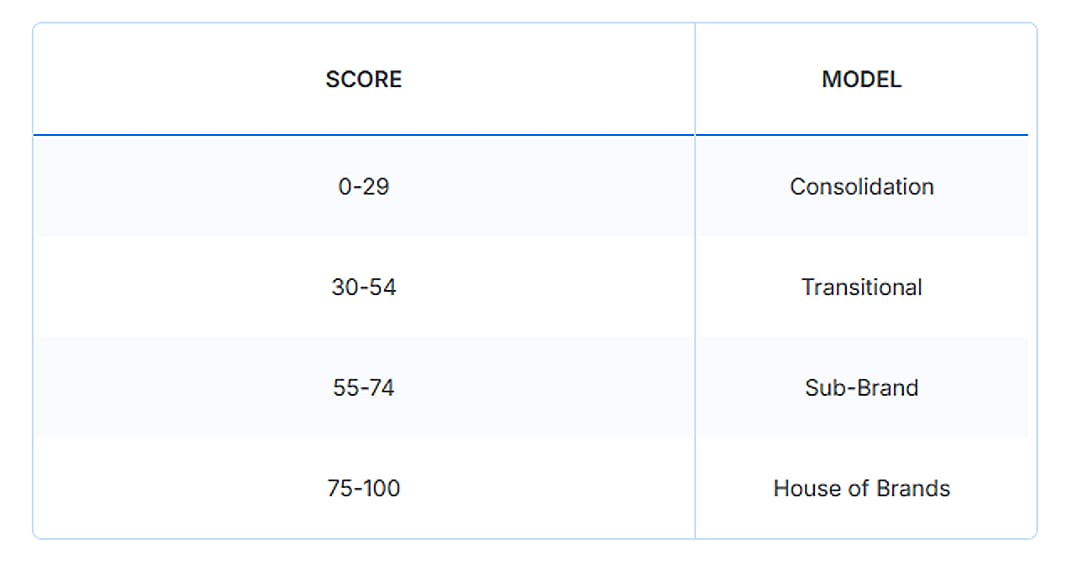
Note: The above scorecard is meant to support your discussions rather than make your decision.
Should your business choose the transitional or consolidation model, the following playbook can help you rebrand while minimizing lost demand and downtime:
Phase 1: Protect
Start by documenting everything that currently creates or captures customer demand.
Inventory:
Create a pre-rebrand baseline for branded search, organic traffic, local visibility, direct traffic, qualified leads, conversion rates, customer acquisition cost, revenue, retention, and review performance.
You cannot tell whether equity was transferred if you never established what it looked like before the transition.
Phase 2: Prepare
Turn the inventory into a migration plan.
Prepare:
Pay particular attention to search engine optimization when a rebrand includes a domain change.
Map existing URLs to their closest relevant destinations. Use appropriate 301 redirects, update internal links, sitemaps, and canonical signals, maintain Search Console tracking, and monitor rankings after launch.
Your brand consolidation and domain consolidation also do not have to happen on the same day. If the existing domain carries substantial digital equity, a phased technical migration may give your team more control over how that equity transfers.
Phase 3: Transition
Coordinate the launch across every place customers encounter the business.
That may include:
Consistency matters because customers experience a brand transition through individual touchpoints rather than through your internal brand architecture presentation.
Make sure the old and new identities clearly connect during the transition period so customers understand they are dealing with the same business.
Now compare post-launch performance against the Phase 1 baseline.
Monitor:
Define thresholds before launch where possible. For example, decide which drops in branded traffic or organic conversion rates would trigger investigation and what recovery trend leadership expects to see.
Do not judge success solely by whether the migration was launched on schedule.
A successful rebrand transfers customer demand and digital equity to the new identity while producing the strategic benefits leadership expected from consolidation.
This story was produced by WebFX and reviewed and distributed by Stacker.