
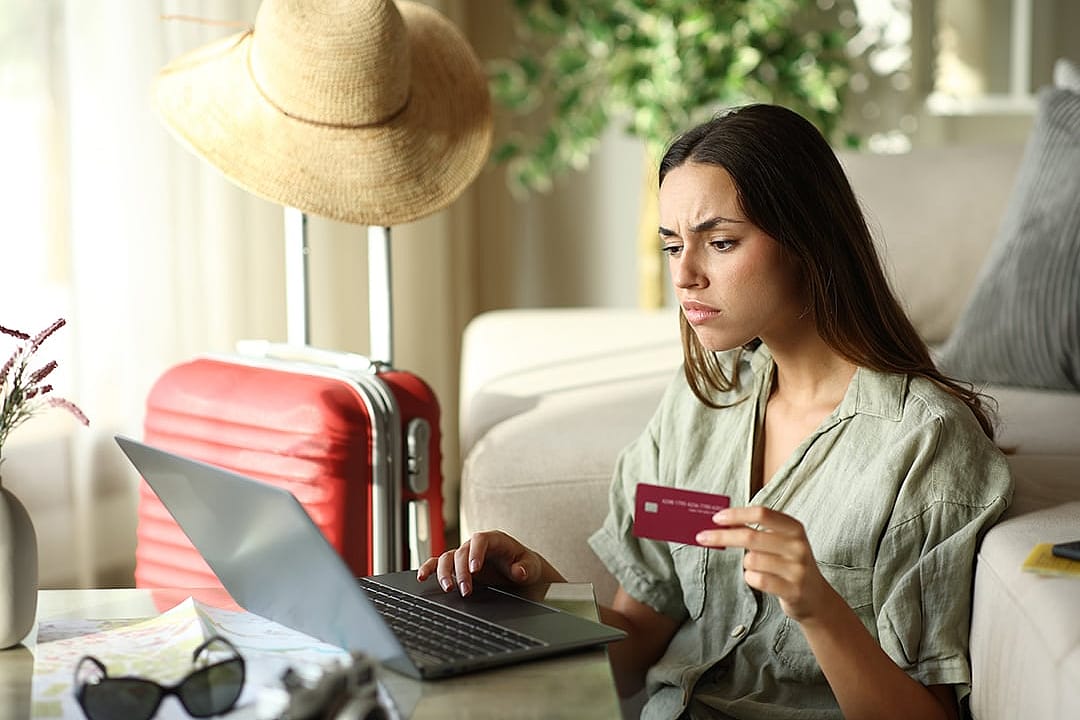

Americans are expected to spend more than ever on holiday shopping this year, and the scams aimed at them are getting harder to spot. Barry J. Babin, the Phil B. Hardin Chair and Distinguished Professor of Marketing at the University of Mississippi, said the National Retail Federation expects November and December spending to top $1 trillion for the first time, with growth of 4.2%. Some other forecasts, he said, project growth as high as 5.5%.
"Consumers are spending and they're spending carefully," Babin said. "But they are going to spend." Shopping carefully is getting harder, though, as fake storefronts, fake reviews and spoofed travel sites grow more convincing.
Babin shared advice with Campus Insights Media on staying safe this holiday season, starting with skipping the click-through.
"The most fundamental difference is that the technology for faking things is much better all the time," Babin said. Scammers can quickly launch fake brand messages, fake storefronts and fake reviews in larger numbers than ever before. Improvements in technology have also made it harder to distinguish real from fake. But shoppers also have more and better technology to try to detect scams. "It's difficult to know who is winning that race," Babin said.
A holiday report from Scamwise, a free scam-checking tool made by Savi Security, offers a look at the scammers' side of that race. The company analyzed more than 250,000 shopping sites that people submitted to its checker from March through October 2026, and found scammers building fake stores much like real retailers do. AI-generated content, which appeared on 74% of scam stores, lets a store with no real inventory fill hundreds of product pages overnight. More than half of the fake stores were hosted on well-known e-commerce platforms, borrowing the platforms’ credibility, and at least one in five could be traced back to an ad on a major search or social media platform.
The fake stores also don't stay up long. They collect payments and disappear, often before anyone can trace them, and 7 in 10 were offline within 90 days of being checked with Scamwise. New ones quickly take their place. Scamwise users flag a never-before-seen fake store roughly every three minutes, or about 500 a day. The number of fake holiday-themed stores submitted to the tool grew fivefold from August to October. The figures reflect what the tool's own users submitted, not a count of every fake store online.
Online reviews call for caution, too. Even Amazon, which has thousands of workers trying to make sure its reviews are legitimate, still has fake reviews slipping through, Babin said. Amazon itself says it stopped more than 250 million suspected fake reviews in 2023 alone.
Babin pointed shoppers to the FBI's list of common holiday scams. Among them:
Shoppers should also be wary of fake storefronts and fake travel agents, Babin said, and travel is a particular concern. "If someone is looking to vacation this holiday season, they need to know they may not always be transacting with the service provider."
He offered an example. A traveler trying to book a room at the Hilton in Savannah might land on a site that looks like the hotel's own but is actually a spoof run by an online travel agency, which may or may not be legitimate. An image that looks copied or doctored can be a sign that you're on a spoof site, he said. Shoppers should make their best effort to deal with the company directly rather than through an intermediary.
Babin compared the problem to the security training many employers require, which includes guidance on which emails to trust and which links to click. Consumers face the same risks but don't always get that training. "Be very wary of click-through," Babin said. If you see a good offer from a retailer you know, go to that retailer's website on your own, without clicking the link, and check whether the offer is there.
Shoppers should go directly to a reputable, authentic website or app, he said, and consider buying in person when the same offer is available in stores. He sees a trend back toward in-store shopping as people look for authentic experiences, especially for high-ticket and luxury items. Buying online, he said, exposes people to fraud much more than buying from a legitimate retailer in a store.
Shoppers now have more tools to research a purchase, Babin said, and can use virtually any AI tool to hunt for bargains. For a suspicious message, he recommends using scam-checking resources to help determine whether the offer is legitimate. One example is Scamwise, a free scam-checking resource that allows users to submit screenshots, texts and forwarded emails for review. Babin noted that Scamwise lists fake online storefronts as the scam its users check most often.
Credit cards offer the most protection for online purchases, Babin said, though that protection varies from card to card. He advised avoiding wire transfers, digital gift cards and cryptocurrency.
Shoppers who think they've been scammed should act quickly. The Federal Trade Commission advises contacting your credit card issuer or bank right away to request a refund, then reporting the scam at ReportFraud.ftc.gov. According to the FTC, reports filed there are shared with federal, state and local law enforcement. The site offers advice on what to do next to recover your money and protect yourself.
This story was produced by Campus Insights Media on behalf of the University of Mississippi and reviewed and distributed by Stacker.